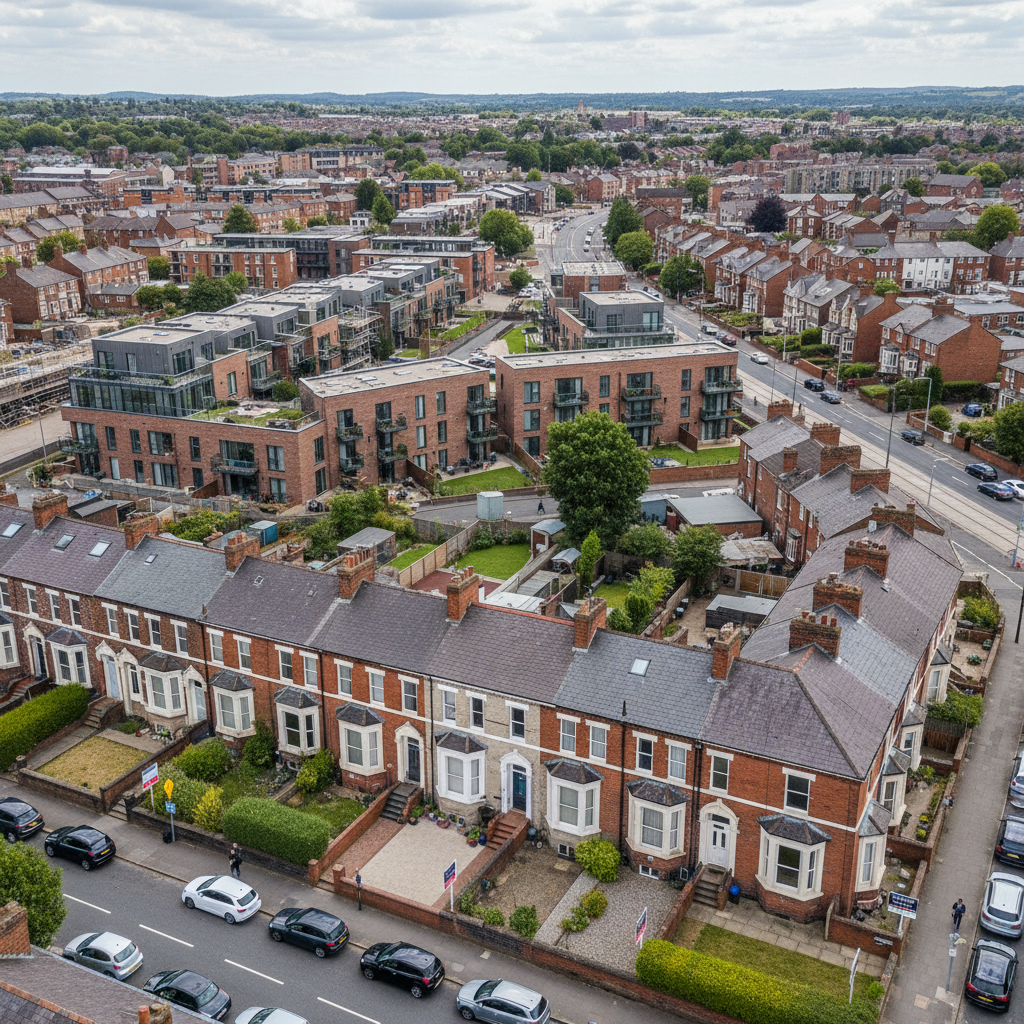
The M21 Property Race: Why Your Neighbours in Chorlton and Whalley Range Are Seeing Different Winners
Imagine for a second that you bought a lovely chocolate bar seven years ago, tucked it away in a drawer, and today it’s somehow grown into a giant, multi-layered cake. That’s essentially what’s been happening with homes across our M21 postcode, but depending on the "flavour" of house you bought, your cake might be significantly larger than your neighbour's.
Back in June 2019, the world looked a bit different, and so did our bank balances. Since then, we’ve seen the big banks change how much they charge us to borrow money (that "base rate" you hear about on the news is now sitting at 3.75%), and the cost of a weekly shop has climbed. These big national shifts act like a filter, changing who can afford what in M21. While more people are getting the "green light" for mortgages lately (about 62,600 people a month across the UK), the higher cost of borrowing means people are being much choosier about the actual building they buy.
The Price Tag Today
If you take a stroll down Hardy Lane or past the leafy corners of Hartington Road, you’ll see some eye-watering price tags. In M21, the gap between property types is now wide enough to fit a fleet of supercars. A typical semi-detached house here is now asking for £509,133. Compare that to a terraced home at £428,171.
Did you know that the difference between the two—roughly £81,000—is the price of adding a driveway, a second bathroom, and perhaps a bit of extra "breathing room" between you and the folks next door? Meanwhile, flats are sitting at an average of £213,607, making them the entry point for those trying to get a foot on the M21 ladder.
The 7-Year Growth Scorecard
This is where it gets really interesting. Not all homes in M21 have grown at the same speed. It’s been a bit like a tortoise and hare race, but in this version, the biggest houses are the ones sprinting.
- The Big Winner: The Semi-Detached. If you bought a semi in M21 seven years ago, it’s worth £66,308 more today. That’s nearly £10,000 in "hidden savings" added to your home every single year just for living there!
- The Steady Runner: The Terraced. These have climbed by £47,605. Still a fantastic result, showing that the classic M21 terrace is as popular as ever.
- The Slow and Steady: The Flat. Owners of flats have seen a boost of £14,371.
Why the difference? Well, when national inflation is at 3.4%, people's wages (which are growing at 3.6%) are only just keeping up. Families are desperate for more space to work from home or for kids to play, which has pushed the price of semi-detached homes up much faster than flats.
What Does This Mean for You?
If you’re sitting in a detached home on Corkland Road or one of the newer spots like Chorlton Villas, you’re sitting on a goldmine. Because there aren't many of these available (we call it a "seller's market" because there are more buyers than houses), your home is a very precious commodity.
For first-time buyers, the current economic squeeze means flats are the most realistic way to stay in M21. While they haven't grown as fast in value as the big houses, they offer a way to stop paying rent and start owning a piece of the neighbourhood.
Looking Ahead to 2027
As we look at the next year, the "space race" isn't over. With mortgage approvals holding steady, I expect the semi-detached and detached homes in M21 to stay in high demand. However, keep an eye on those terraced houses—as semis become too expensive for some, the humble terrace is likely to be the next "growth star" as buyers look for the best bang for their buck.
Whether you're in a cosy flat near Wilbraham Road or a grand semi, the M21 story is one of resilience. We’re still a place where people desperately want to live, and that's the best news any homeowner can hear.