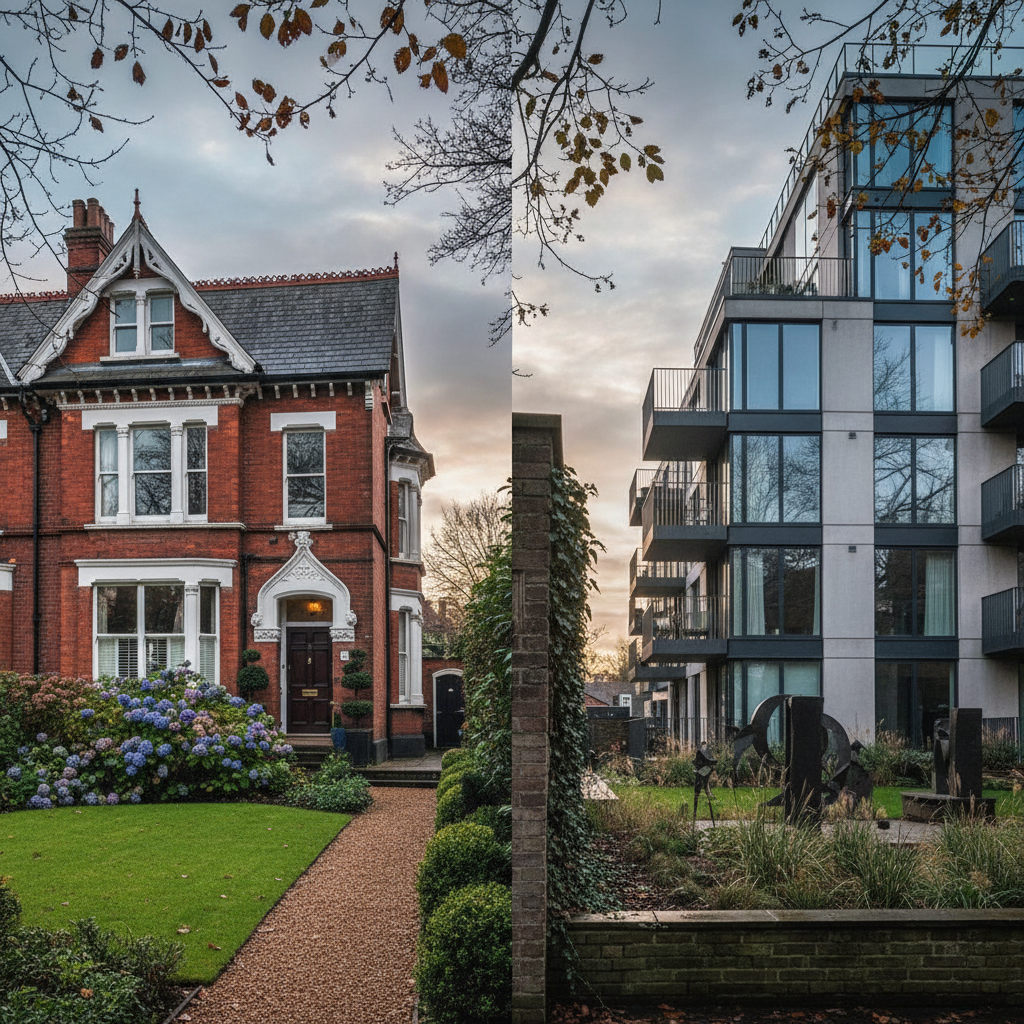
The M21 Growth Gap: Why a Manchester Semi is Galloping Ahead of the Average Flat this November
Ever wondered if the bricks and mortar surrounding you are working as hard as you do? While we’re all keeping a close eye on the weekly shop or the cost of filling up the car, there’s a much bigger story playing out right under our roofs here in Manchester. If you live in a semi-detached house in the M21 postcode, your home has essentially been earning a "salary" of its own over the last few years—and a rather generous one at that.
I was chatting with a family near Edge Lane recently who were shocked to learn just how much the "gap" between different types of homes has widened. We often think the property market moves as one big wave, but in reality, it’s more like a collection of different boats. Some are speeding ahead, while others are bobbing along more gently.
The Big Picture: Why is this happening?
You might have heard the news that the Bank of England has set its base rate at 3.75%. While that sounds like just another number, it’s the remote control for our local housing market. With inflation at 3.6%, the cost of living is still a bit of a squeeze.
Because borrowing money is more expensive than it used to be, people are being very choosy. Those looking for flats—often our first-time buyers—are feeling the pinch the most because they don't have a previous house to sell. Meanwhile, families looking for more space in places like Chorlton-cum-Hardy are still competing fiercely for "forever homes," which keeps those prices climbing.
The Great M21 Price Ladder
Let’s look at the "price of a move." In M21, the jump between property types is fascinating:
- Flats: These are currently sitting at an average of £234,617.
- Terraced Houses: Moving up to a terrace, like the beautiful ones we see near Chequers Road, will cost you around £450,608.
- Semi-Detached: The family favourite average is £544,779.
Think about that: the jump from a terrace to a semi is roughly £94,000. That’s a significant "upgrade cost," but when you consider it usually buys you a driveway, a side entrance, and often a bigger garden for the kids to kick a ball around, many local families clearly think it’s a price worth paying.
The 7-Year Winning Streak
This is where it gets really interesting. If we look back seven years to 2019, the difference in "wealth" created by your home depends entirely on its shape.
- The Semi-Detached Superstar: If you bought a semi seven years ago for £384,951, your home has grown by a whopping £159,828 (41.5%). That’s nearly £23,000 in "hidden earnings" every single year.
- The Terraced Trotter: These have gained £103,100 (29.7%) in the same time. Still a fantastic result, but nearly £57,000 less than their semi-detached neighbours.
- The Flat: Owners of flats have seen a gain of £49,789 (26.9%).
Why the difference? During the last few years, everyone started craving "elbow room." Garden space and a spare room for a home office became the "must-haves," causing the value of semis to skyrocket compared to smaller homes.
What should you do?
If you own a detached home (we’ve seen some incredible sales lately, like one on Corkland Road for over £1 million), you are sitting on a very rare and desirable asset. There simply aren't enough of them to meet demand.
If you’re in a flat and thinking of moving, don't be discouraged by the lower growth percentage. Because the market is currently a "Seller's Market" with only 125 properties for sale across the whole of M21, your home is still very much in demand for those looking to get their first foot on the ladder.
Looking ahead to 2027, I expect the semi-detached market to remain the powerhouse of Manchester. However, as earnings growth (currently at 3.1%) starts to catch up with house prices, we might see terraced homes become the new "hot ticket" for those who find the jump to a semi just a little too far.